
Introduction
Historic buildings fight a constant battle against water, thermal movement, and settlement. Add decades of well-intentioned but incompatible repairs, and even a solid structure starts failing from the inside out.
Material choice decides whether a restoration project succeeds or accelerates decay. Modern cement mortar cracks century-old brick. Standard caulk tears apart after a few seasons of joint movement it was never designed to absorb.
This guide covers traditional materials that keep historic fabric authentic, modern materials that solve problems traditional methods couldn't, and how to choose between them.
We'll also look at specialized joint protection systems, the kind specified on landmarks like the Washington Monument and the U.S. Supreme Court. These systems address one of restoration's most persistent failure points: sealant breakdown.
Key Takeaways
- Lime mortar and matched masonry remain the gold standard for historic authenticity and compliance
- Modern materials like FRP, epoxy, and lead joint systems fix failure points traditional materials cannot
- Compatibility (breathability, flexibility) matters more than color-matching alone
- Standard caulk fails in 5-10 years; lead joint protection can last 75-100 years
- Reusing existing buildings avoids decades of embodied carbon compared to new construction
Understanding Historic Building Restoration: Key Terms and Approaches
Most people use "historic building restoration" as a catch-all term. Professionals draw sharper lines. Historic preservation means ongoing stewardship of a property. Adaptive reuse repurposes a building for a new function, usually under a rehabilitation approach.
The National Park Service's Secretary of the Interior's Standards define four distinct treatment approaches. Confusing them leads to the wrong material choices later.
The Four NPS Treatment Standards
- Preservation – Sustaining a property's existing form, integrity, and materials with minimal intervention
- Rehabilitation – Repairing and altering a building for compatible new use while preserving character-defining features
- Restoration – Depicting a building's appearance at one specific historical period, removing later additions
- Reconstruction – Rebuilding a non-surviving structure to replicate its historic appearance

Choosing the right approach upfront determines which materials make sense later. A rehabilitation project converting a warehouse into offices has far more material flexibility than a restoration locked to a single historic period.
Get the approach wrong and you either over-restore a building that only needs stabilizing, or specify incompatible materials on one that demands strict historic matching.
Traditional Restoration Materials That Preserve Authenticity
Traditional materials remain the standard for maintaining a building's authenticity and passing GSA or NPS compliance review. They're specified because they behave the way the original structure expects them to, not out of nostalgia.
Lime-Based Mortars & Masonry Repair
Lime mortar, not modern Portland cement, is specified for historic masonry repointing. Historic brick and stone need to release moisture through their joints. Cement mortar is harder and less permeable than the surrounding masonry, which traps moisture inside and accelerates decay.
The National Park Service's guidance on repointing historic masonry is explicit: replacement mortar must be softer and more permeable than the historic mortar it replaces, never the reverse.
Repointing work must also match:
- Original mortar strength and composition
- Color and sand texture
- Joint profile and tooling pattern
Get any of these wrong, and the new mortar stresses the surrounding brick or stone instead of protecting it.
Wood Restoration Materials
Historic wood elements such as window sashes, beams, and cornice moldings rarely need full replacement. Standard practice includes:
- Epoxy consolidation for porous, decayed wood fibers before patching and sanding
- Hand-stripping paint layers to assess true condition underneath
- Splicing in new wood only where deterioration is too advanced to consolidate
For visible replacement pieces, matching species and grain pattern keeps repairs visually seamless, even when that match isn't strictly required for structural performance.
Plaster & Roofing Materials
Interior ornamental plaster typically uses a sand base coat and a lime putty finish, often gauged with gypsum for workability. Compatibility with the existing plaster substrate matters more than chasing an exact historic recipe.
On roofs, slate, tile, and wood shingle repairs follow the same compatibility principle. Match the original:
- Size, color, and texture
- Exposure and installation pattern
The National Park Service notes that concrete, metal, or plastic substitutes for clay tile are generally inappropriate, since mismatched patches can physically damage the surrounding original material.
Modern & Specialty Materials Transforming Restoration
Traditional materials handle most historic fabric, but some failure points need modern engineering. Structural cracking, seismic loads, and sealant breakdown are areas where science has developed solutions traditional materials weren't built to address.
Structural Repair & Reinforcement Materials
Non-shrink grouts, epoxy resins, and mechanical anchors fill cracks and restore structural strength without the shrinkage or corrosion issues of older repair methods. Federal specifications require anchor grout to hit at least 4,000 psi compressive strength, with anchors typically galvanized or stainless steel to prevent corrosion staining on masonry faces.
For seismic and structural retrofits, two materials stand out:
- Fiber Reinforced Polymers (FRP): Fiberglass or carbon mesh embedded in epoxy and bonded to masonry. Tests on ~130-year-old brick walls showed 157–234% greater strength than untreated controls.
- Ferrocement: Wire-mesh-reinforced cement jacketing. One masonry wall study recorded shear strength nearly five times that of unreinforced panels.
Both come with a caveat. The National Park Service warns that aggressive retrofit placement can destroy the historic integrity it's meant to protect. Sensitive placement and minimum fabric loss matter as much as raw strength gains.
Sustainable & Composite Materials
Reclaimed wood, cellulose insulation, and sheep's wool insulation reduce environmental impact while mimicking historic appearance and performance. Two practical cautions:
- Cellulose insulation should be borate-treated only. Sulfate-treated versions can form sulfuric acid in moist conditions and corrode metal fasteners.
- Synthetic slate and tile substitutes are lighter and less moisture-absorptive, but many aren't repairable or recyclable long-term.
Solving the Sealant Failure Problem: Masonry Joint Protection Systems
Caulk and sealant joints fail more often than almost any other component in historic masonry restoration. Buildings settle. Stone expands and contracts with temperature swings. Standard sealants simply weren't built to stretch that far, that often, for that long.
ASTM's technical guidance on historic stone joint repair puts hard numbers on the problem: typical sealants last just 5-10 years in these joints, compared to 25-50 years for mortar and 75-100 years for lead.
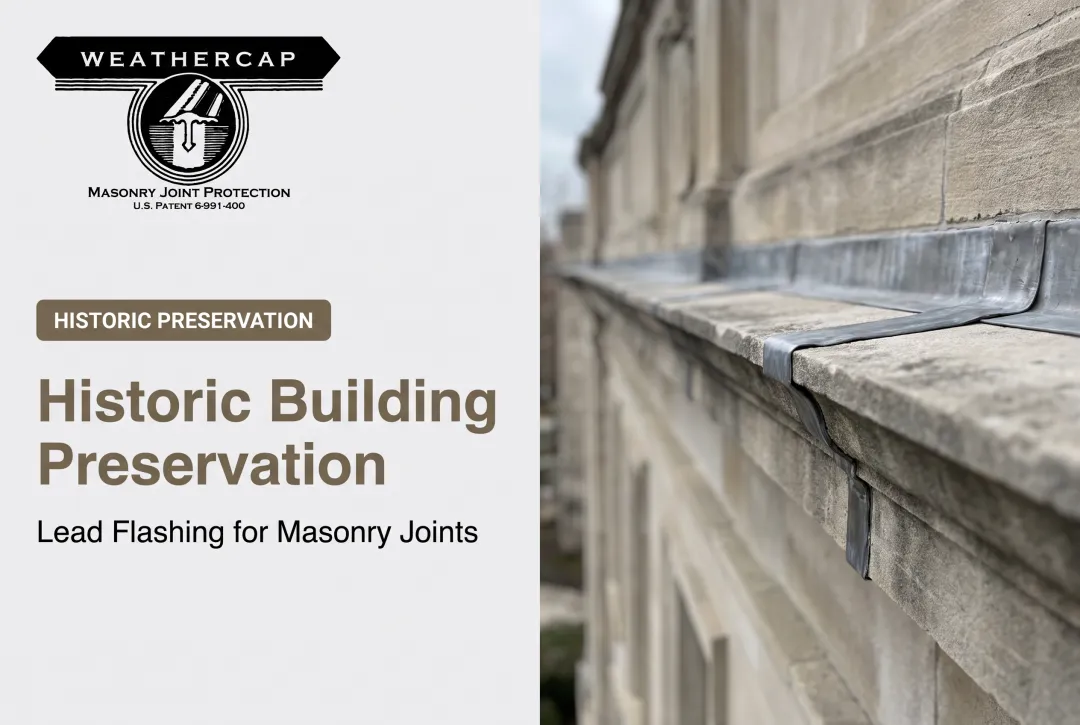
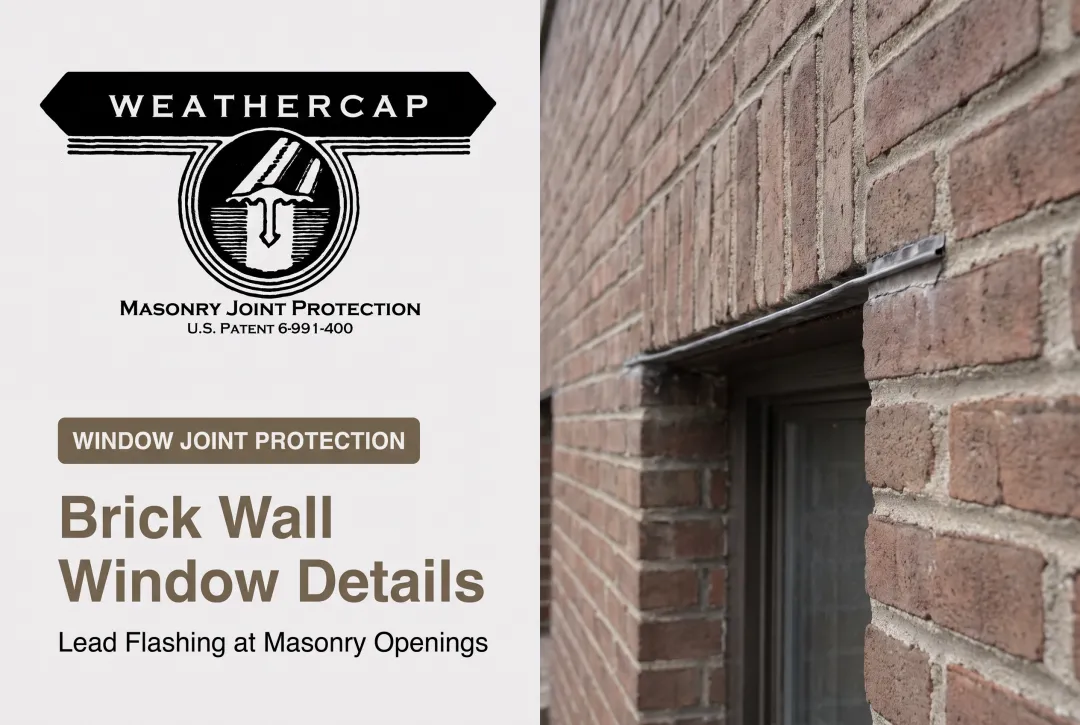
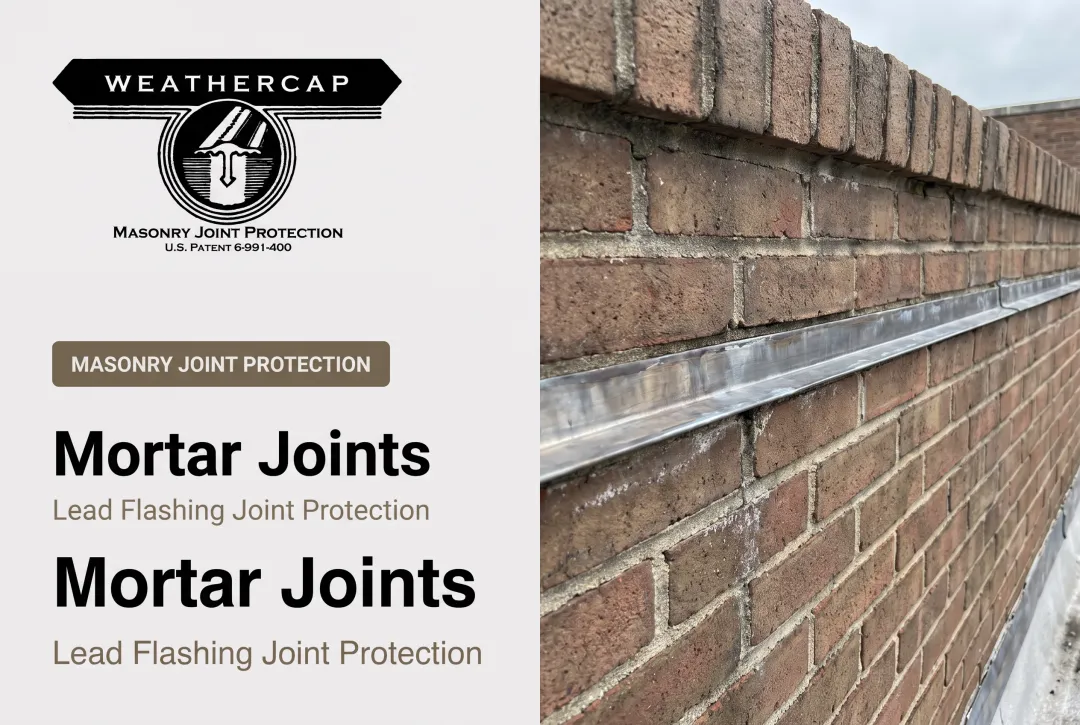
That durability gap is what Weathercap® was built to close. The patented soft lead strip sits within masonry joints on parapets, copings, cornices, and balustrades. It works alongside the specified sealant rather than replacing it.
How the system works:
- Lead's low creep strength lets it conform to a joint's new shape after movement, instead of springing back and reopening a gap.
- Interposing the strip halves the effective joint opening, cutting movement stress on the sealant underneath.
- The surface oxidizes to a neutral grey within weeks, blending into surrounding stone without paint.
Weathercap is specified in GSA Historic Preservation Technical Procedures (Document 07656-01). Installations include the Washington Monument, U.S. Supreme Court, Smithsonian Institution, U.S. Treasury Building, and more than two dozen other federal buildings, state capitols, and university campuses.

Products ship in 6-foot lengths within 48 hours of ordering—useful when a crew is racing a weather window.
How to Choose the Right Restoration Material for Your Project
Material selection shouldn't start with a product catalog. It should start with a condition assessment.
Start With a Condition Assessment
Before specifying anything, document:
- Original materials – composition, dimensions, and installation method
- Cause of deterioration – moisture, structural movement, chemical exposure, or natural aging
- Load and movement conditions – how much the building actually shifts seasonally
Skipping this step is how projects end up specifying a material that looks right but performs wrong.
Prioritize Compatibility Over Appearance
A material that matches color perfectly but blocks moisture vapor will cause more damage than the deterioration it's meant to fix. Compatibility means checking:
- Breathability – does it let moisture escape the way the original material did?
- Flexibility – can it absorb the building's actual movement range without tearing?
- Thermal expansion – does it expand and contract at a similar rate to surrounding materials?
This is the same logic that governs mortar selection (softer than the masonry) and joint protection (materials that creep with movement rather than resist it).
Confirm Compliance Requirements
Before finalizing specs, check:
- GSA Historic Preservation Technical Procedures for federal buildings
- State or local historic commission guidelines
- Federal Historic Tax Credit material standards, if the project qualifies
Architects and specifiers on landmark-grade projects often lean on manufacturer documentation—CAD drawings, three-part specifications, and MSDS sheets—to move through compliance review faster. That paperwork exists because reviewers need proof a material has been tested, not just picked because it looked close enough in a catalog.
Sustainability and Long-Term Performance in Restoration Materials
Restoration is an environmental decision with a measurable carbon impact. The EPA notes that even an energy-efficient new office building built with up to 40% recycled materials takes roughly 65 years to recover the energy lost by demolishing a comparable existing structure.
That's the embodied carbon case for restoration over demolition. Demolition, site clearing, and new material production all carry a carbon cost that renovation avoids entirely.
Material durability feeds directly into that math:
- Materials that extend the service life of existing building fabric reduce both lifecycle costs and landfill waste
- A joint protection system rated for 75-100 years generates far less replacement waste than one needing replacement every decade
- Regionally sourced, compatible materials are easier for future restoration teams to match and maintain
Long-term performance also depends on the next restoration crew. Decades from now, they still need to find compatible materials and understand what's already in the wall.

Frequently Asked Questions
What is it called when you restore old buildings?
This work is broadly called "historic preservation" or "historic restoration." Professionals use more specific terms such as rehabilitation or adaptive reuse, depending on whether the goal is compatible new use or period-accurate restoration.
What are the 4 types of historic preservation?
The Secretary of the Interior's Standards define four treatments: Preservation (sustaining existing form), Rehabilitation (adapting for new use), Restoration (depicting one historic period), and Reconstruction (rebuilding a non-surviving structure).
What is the most common material used in historic building restoration?
Lime-based mortar and matched masonry units remain the most common traditional materials. Epoxy resins and lead joint protection systems are the most common modern additions for structural and moisture-related repairs.
Why do sealants and caulk fail so often on historic masonry?
Ongoing building settlement and thermal movement stress standard sealants beyond their elastic capacity. Most last just 5-10 years in these conditions before tearing or cracking.
How do restoration professionals match new materials to old ones?
Professionals rely on lab analysis of original material composition and color-matching. They also use sourcing techniques such as salvaged slate or species-matched wood so repairs blend with surrounding fabric.
Is historic restoration more expensive than new construction?
Upfront costs can run higher due to specialized labor and materials. But long-term durability, historic tax credits, and avoided demolition costs often offset the difference over a building's lifespan.