
That disconnect is exactly why coping leaks are so damaging. Water can travel sideways through a joint for feet before it finally drips down inside the wall cavity, making the actual entry point tricky to pin down without a systematic inspection.
This guide walks through why coping stones leak, how to trace a leak back to its true source, what fixes actually work, and when repair stops making sense compared to full replacement. We'll also cover the joint protection systems that keep repairs from failing again next season.
Key Takeaways
- Nearly every coping leak traces to failed mortar joints, shifted stones, degraded sealant, or building movement
- A single cracked joint is usually repairable; widespread cracking or missing stones usually means replacement
- Diagnose before you patch—fixing the wrong spot lets the leak resurface
- Flexible, interposed joint systems outlast sealant-only repairs on joints exposed to seasonal movement
What Are Parapet Wall Coping Stones?
Coping is the capping unit, whether stone, precast concrete, terra cotta, or metal, installed along the top edge of a parapet wall. Its job is to intercept rain and throw it clear of the masonry below rather than letting it soak straight down into the wall.
Individual coping units are joined by mortar beds, sealant joints, or both. Those joints are the weak link. According to the Brick Industry Association Technical Notes 7, water that passes through masonry typically travels through the small separations between units and mortar joints, not through the solid material itself.
Coping is a wearing component, not a set-it-and-forget-it detail. Constant sun, rain, and freeze-thaw cycling mean the joints will eventually need maintenance or replacement, no matter what material sits on top.
Common Problems & Root Causes of Leaking Coping Stones
Nearly every coping leak traces back to one of four failure points. Getting the diagnosis right determines whether you're looking at a $200 repair or a full coping replacement.
Problem 1: Cracked or Damaged Mortar Joints
- Symptoms: Visible cracks or gaps between stones, water stains directly beneath the joint line
- Cause: Mortar shrinkage, freeze-thaw cycling, or simple age-related breakdown of the binder
Problem 2: Loose, Shifted, or Missing Coping Stones
- Symptoms: Stones that rock underfoot, visible gaps, entire sections missing
- Cause: Failed anchor fixings, wind uplift, or long-term wall settlement
Problem 3: Failed Caulk or Sealant Joints
- Symptoms: Sealant gone brittle, cracked, or pulled away from the stone edge
- Cause: UV breakdown combined with building movement that stretches the joint past the sealant's elastic limit
Problem 4: Building Movement and Settlement Cracking
- Symptoms: The same crack reappears shortly after repair, often widening with the seasons
- Cause: Unresolved thermal or structural movement that no rigid repair material can absorb
Building movement deserves special attention because it's the root cause most often missed. Mass masonry without adequate movement joints accumulates stress from thermal cycling, frame movement, and irreversible brick expansion.
That stress shows up as cracking, displacement, or bowing at the parapet. IIBEC research (2016) documented a parapet displaced by unaccommodated brick expansion.

What Happens If You Ignore It
Water that gets past the coping doesn't stop moving once it's inside the wall.
- It freezes. Trapped moisture expands as it freezes inside the parapet core, widening cracks with every cold snap.
- It spreads. Interior ceilings, insulation, and finishes in the rooms below start showing damage.
- It escalates. A repair that would have cost a few hundred dollars in year one can turn into a full parapet reconstruction project after two or three ignored seasons.
How to Fix Leaking Parapet Coping Stones (Step-by-Step)
Patching a coping leak before finding its actual source is one of the most common (and expensive) mistakes in masonry maintenance. Water travels sideways along mortar joints before it drips down internally, which means the drip point inside rarely matches the entry point outside.
Find the Source Before You Touch Anything
Inspect the coping dry, then again immediately after rain, to catch fresh moisture paths. Run a controlled hose test starting at the lowest section and working upward, isolating one joint at a time. Check whether interior staining lines up with a single joint (localized failure) or spreads across the wall (widespread mortar failure).
Before repairing anything, confirm the failure category:
- Mortar bed joints
- Sealant/caulk joints
- The stone unit itself
- Ongoing structural movement
Rule out roof membrane tie-ins or flashing above the coping first, since these can mimic a coping leak entirely. And don't reseal or repoint before confirming the cause. It wastes materials and can trap moisture inside the wall.
Fixing Failed Mortar Joints
Rake out deteriorated mortar to a consistent depth and repoint with a mix matching the original in strength and porosity. Tool the new joint so it sheds water outward instead of channeling it back into the wall.
Fixing a Failed Sealant/Caulk Joint
Remove old, cracked sealant completely. Applying fresh sealant over failed sealant just causes a repeat failure within a season or two.
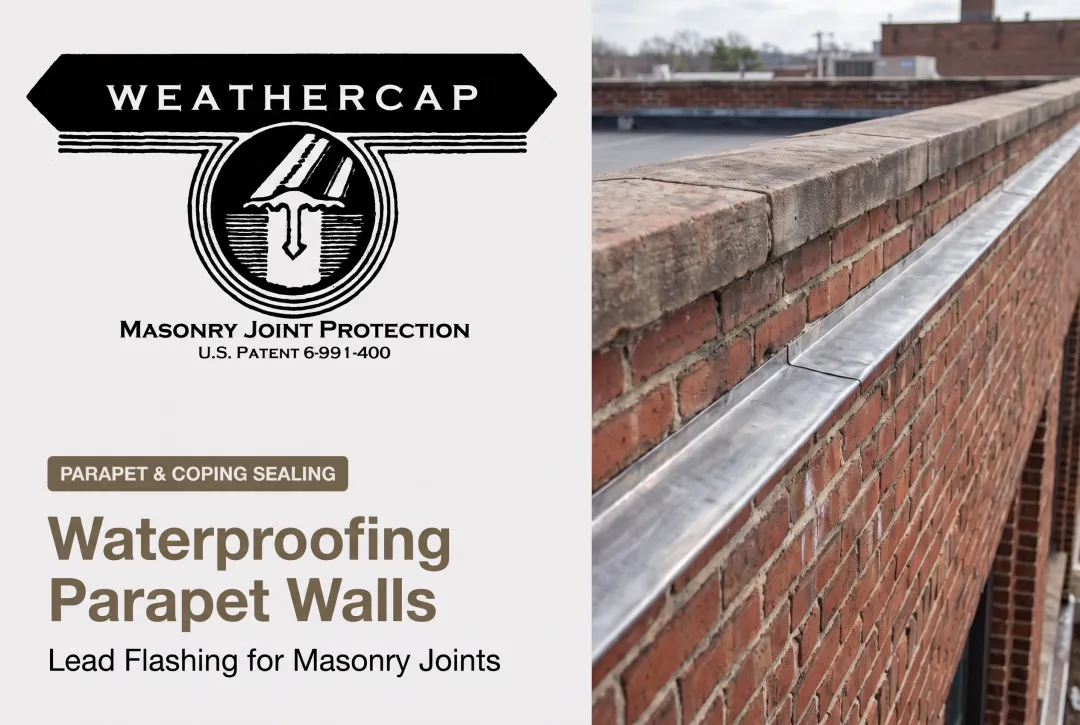
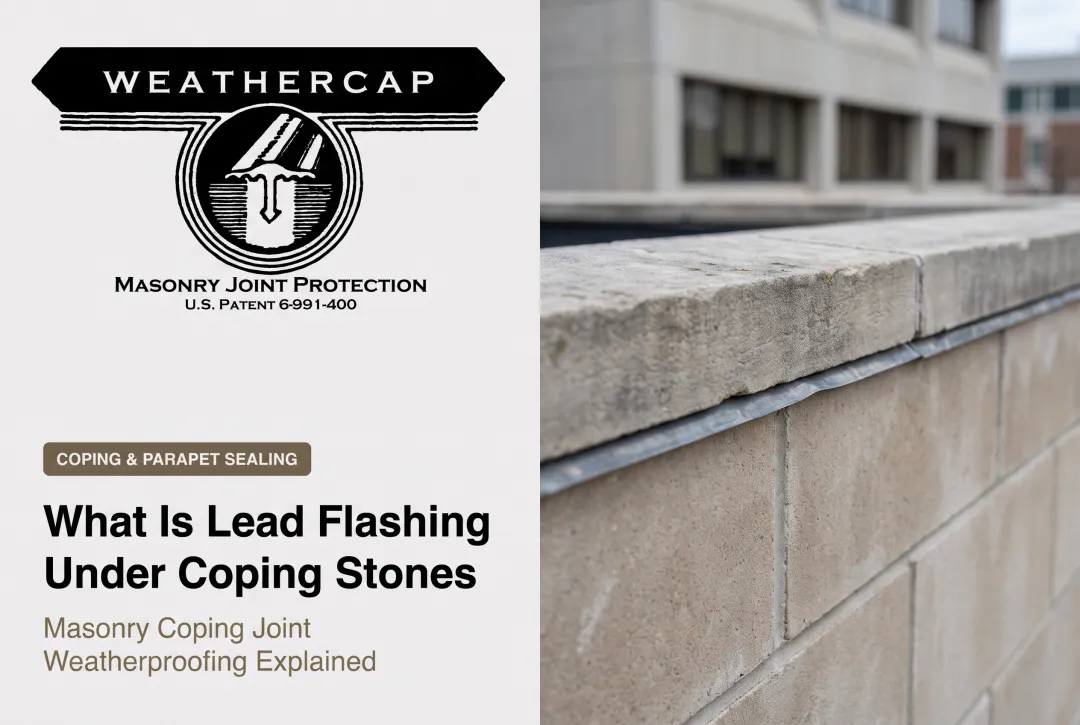
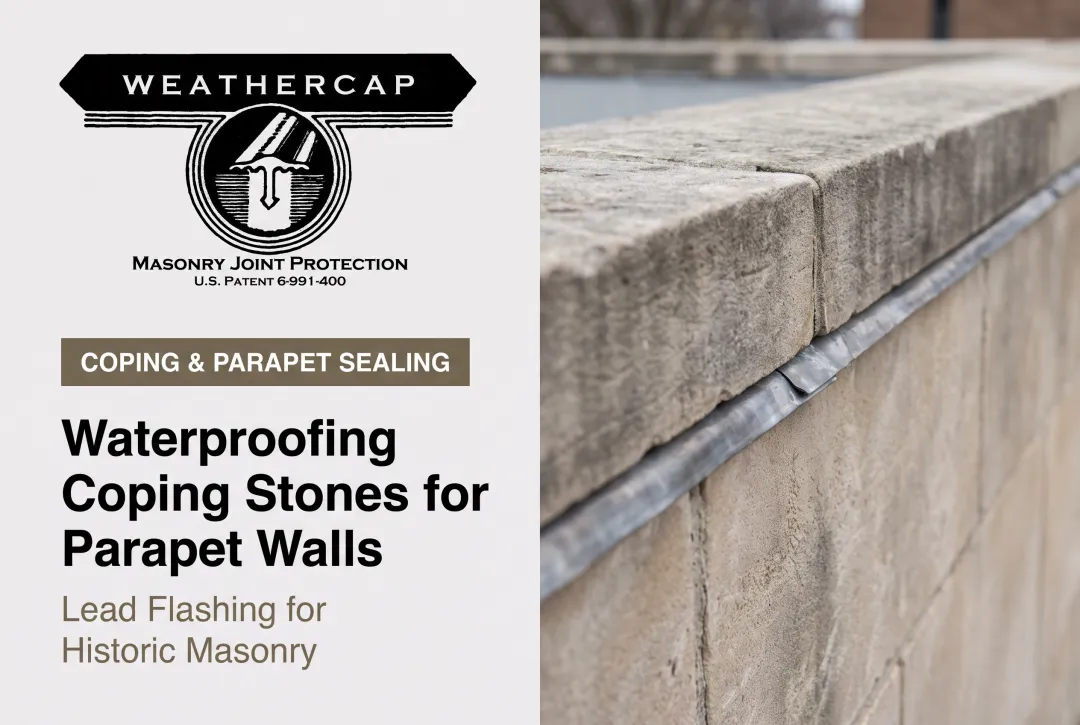
For joints exposed to ongoing building movement, sealant alone often isn't enough. Placing a flexible strip, such as Weathercap's patented soft lead system, within the joint before sealing gives the assembly something to absorb stress. The sealant no longer has to stretch and shrink on its own.
This approach is specified in the GSA's Historic Preservation Technical Procedures (Document 07656-01). It has been used on projects including the Washington Monument and U.S. Treasury Building, so it fits both standard commercial coping and landmark restoration work.
Sizing matters here. Weathercap's lead strip comes in two configurations, chosen based on joint width:
| Type | Configuration | Joint Width Range (I.D.) |
|---|---|---|
| Type A | Flat Cap | Under 3/8 in. to under 1-1/2 in. |
| Type B | 90° Cove Cap | Under 5/16 in. to under 1-1/4 in. |
Material ships in 6-foot lengths, and the correct size is calculated as joint width plus anticipated movement plus a 1/4-inch allowance.
Fixing Cracked, Loose, or Missing Stones
Remove and reset loose stones on a fresh mortar bed, with a proper drip-edge detail that throws water clear of the wall face. Cracked or missing stones should be replaced entirely, matching the original profile and slope, rather than patched.
Fixing Ongoing Building Movement
Install expansion joints at appropriate intervals rather than relying on one continuous rigid seal to absorb seasonal thermal movement. At movement-prone junctions, reduce dependence on caulk alone by adding an interposed material, like a soft lead strip, that flexes without tearing as the structure shifts.
Test and Validate the Repair
Once materials have fully cured, re-run a water test on the repaired section. Then monitor the previously affected interior area through at least one full rain cycle and one seasonal temperature swing before calling the job done.

Fix vs Replace: Making the Right Call on Coping Stones
Cost, recurrence risk, and preservation requirements drive the fix-versus-replace call. Use the scenarios below to decide.
Isolated Joint Failure
- Fix: Repoint or reseal the single affected joint. This is cost-effective when the surrounding stones remain sound.
- Replace: Only necessary if that same joint fails again shortly after repair.
Multiple Stones Cracked or Missing
- Fix: Spot-repair individual stones only if the damage is limited to one or two units.
- Replace: Replace the entire coping run when several stones show cracking—that pattern points to widespread age-related failure, not an isolated incident.
Recurring Leaks or Historic Structures
- Fix: Prefer repair when a new root cause (such as unaddressed building movement) is identified and corrected—especially on historic buildings, to retain original material.
- Replace: Necessary if leaks persist despite proper repair, or if stones are too deteriorated to hold their original profile.
The National Park Service offers a clear scale benchmark. When 25 to 50 percent or more of a wall needs repointing, full repointing or replacement is usually more cost-effective than piecemeal patching (NPS Preservation Brief 2).
The same logic applies to coping runs. Fix root causes first. Repointing over unresolved movement wastes labor and material.
Common Mistakes & Preventive Maintenance
A few repair habits keep parapet coping joints leaking. Avoid these mistakes, then build a simple inspection routine around the joints that fail first.
Common Mistakes to Avoid
- Resealing over old, failed sealant instead of removing it fully, which traps moisture and hides the real problem
- Treating cracked mortar or caulk as the root issue while ignoring building movement, so the crack reappears
- Using rigid, non-flexible caulk on joints that see seasonal thermal movement
Preventive Measures
- Inspect coping and joints at least once a year, ideally right after the winter freeze-thaw season
- Upgrade joint protection before sealant reaches end-of-life with a flexible, interposed system that extends seal life under movement
- Keep gutters, drains, and roof scuppers clear so water doesn't pool against the parapet and stress the joints
Frequently Asked Questions
Why do parapet walls leak?
Parapet leaks typically start at coping joints, cracked mortar, or failed sealant. Water gets trapped in these gaps and travels down into the interior walls below the roofline before it ever becomes visible outside.
How do you waterproof parapet coping stones?
Combine metal flashing under the stones with polyurethane or silicone sealant at every joint. Add a flexible joint cover, such as a soft lead strip, that moves with the building so the seal does not tear.
Can leaking coping stones be repaired instead of replaced?
Isolated mortar or sealant failures can usually be repaired. Widespread cracking, multiple missing stones, or repeated leak recurrence in the same spot typically call for replacement instead.
What are the first signs of a leaking coping stone?
Watch for water stains near joints, loose or shifted stones, cracked mortar, and interior damp patches or mold below the roofline.
How much does it typically cost to fix leaking coping stones?
Costs vary widely based on the extent of damage. Simple joint repairs cost far less than full coping replacement. Get multiple quotes from qualified masonry contractors before committing to a scope of work.
Does the material of the coping stone affect how likely it is to leak?
All coping materials, including stone, concrete, terra cotta, and metal, can leak once their joints fail. Joint protection and detailing matter more to long-term performance than the material choice itself.