
Introduction
You're tearing out a basement wall during a renovation, and there it is: a heavy grey ring wrapped around your cast iron pipe. It looks ancient. It looks like lead. Your first thought is probably "is this going to hurt me?"
That grey ring is almost certainly a lead joint, also known as a lead-and-oakum joint. This is a plumbing technique that sealed cast iron drain, waste, and vent pipes for most of the last century.
This article covers what lead joints are, how plumbers made them, and whether they're dangerous. It also looks at where lead still shows up in construction today—including masonry joint protection on commercial and historic buildings.
Key Takeaways
- Lead-and-oakum joints sealed cast iron drain pipes for most of the 20th century
- Many codes still allow them on drains and vents; the 1986 SDWA banned lead in potable water lines
- Intact lead drain joints pose minimal health risk—they never contact drinking water
- No-hub couplings and PVC/PEX dominate new work, but lead still serves specialized building roles
What Are Lead Joints?
A lead joint is a mechanical connection method for cast iron bell-and-spigot pipe. The narrower spigot end of one pipe fits into the wider hub (bell) of the next. Plumbers pack the gap between them with oakum fiber, then pour molten lead on top to lock everything in place permanently.
This isn't a modern invention. The word "plumbing" traces back to the Latin plumbum, meaning lead, and Roman engineers used lead extensively in their water systems. The technique cast iron plumbers used well into the 1970s and 80s was a direct descendant of that ancient practice.
Why Lead Was the Material of Choice
Lead had three qualities no other common metal matched at the time:
- Low melting point — melts at roughly 621°F, low enough for field work with a portable pot and burner (Cast Iron Soil Pipe Institute handbook)
- Malleability — once poured and cooled, it could be hammered (caulked) into every crevice of the joint without cracking
- Corrosion resistance — it withstood decades of exposure to waste, moisture, and soil gases without breaking down

Here's the critical distinction homeowners often miss: lead joints were used on drainage, waste, and vent lines, not on pipes carrying drinking water. That single fact drives almost everything about their safety profile, which we'll get into shortly.
Oakum Does the Sealing, Lead Does the Locking
Oakum, a fibrous packing material, is the actual gasket in this system. It's stuffed into the joint first and swells when it gets damp, creating an initial seal against water and gas. Lead poured on top compresses and permanently locks the oakum so it can't shift or dry out over time.
Older plumbing codes treated this as codified science, not guesswork. New York City's historic building code, for instance, specified exact minimum lead quantities for cast iron soil pipe joints, requiring at least one inch of poured lead depth. This was regulated craftsmanship with inspection requirements, not something a handyman improvised.
How Lead Joints Are Made: The Traditional Process
Making a proper lead-and-oakum joint required specific tools and a precise sequence. Skip a step, and you got a leak. Rush the pour, and you got weak spots.
Tools and Materials of the Trade
A cast iron plumber's kit for this job typically included:
- Lead blocks or bars
- Oakum rope (tarred hemp or jute fiber)
- Melting pot with a portable burner
- Ladle for pouring
- Running rope (joint runner) to contain molten lead during the pour
- Caulking irons (inside, outside, and specialty irons for tight spots)
Step-by-Step: Pouring and Caulking a Joint
- Clean and align the pipe. The hub and spigot needed to be free of debris and properly seated before any packing began.
- Pack the oakum. Plumbers wound oakum tightly around the spigot, leaving about one inch of space near the hub's outer edge reserved for lead.
- Set the running rope. This rope wrapped around the joint to contain the molten lead during pouring, with a small gap left at the top for the ladle.
- Pour the lead. Lead was melted in the pot, skimmed of dross, and poured in one continuous motion. Stopping mid-pour created weak spots that could fail later.
- Caulk it tight. Once the lead cooled, plumbers removed the rope and used caulking irons to compress the metal firmly against both pipe and hub, creating a watertight, gas-tight seal.

That last step mattered as much as the pour itself. A poorly caulked joint, even with plenty of lead, could still leak.
Lead Joints vs. Modern Pipe Joining Methods
Cast iron plumbers today rarely melt lead. The trade moved on, and for good reason.
| Method | How It Seals | Installation Speed |
|---|---|---|
| Lead-and-oakum | Compacted fiber plus poured, caulked metal | Slow — requires heating, pouring, cooling, caulking |
| No-hub coupling | Rubber gasket compressed by a stainless steel band | Fast — tighten with a torque wrench and done |
| Compression gasket bell-and-spigot | One-piece rubber gasket compressed on insertion | Fast — no tools beyond a lubricant and a lever |
| Push-to-connect / PVC-PEX | Elastomeric seals or solvent welds | Fastest — no molten metal, minimal training |
These newer methods still deliver a watertight seal, but they won out for practical reasons:
- Faster installation on tight construction schedules
- No open flame or molten metal on job sites, reducing worker injury risk
- Easier code compliance and apprentice training
A well-made lead joint from 1955 can still be perfectly functional today. The industry simply found faster, safer ways to achieve the same watertight result.
Are Lead Joints Safe?
This is the question that actually brought most readers here, so let's answer it directly.
Are They Legal Today?
Yes, in many places, but only for the right application. The 1986 Safe Drinking Water Act amendment banned lead in pipes, fittings, and solder used for potable water systems, or any plumbing that provides water for human consumption, according to the EPA.
That law targeted drinking water. It did not create a blanket national ban on lead-and-oakum joints for drainage.
The current International Plumbing Code still specifies construction requirements for caulked cast iron joints, including a minimum of one inch of molten lead depth per the 2024 IPC.
Whether it's permitted on your project depends on your locally adopted code, so check with your municipality before planning a repair or new installation.
Is It Safe to Live With Lead Pipe Joints?
The distinction between drain lines and water lines matters:
- Lead drain/vent joints: Generally low risk if left undisturbed. Waste water flows past them without prolonged contact, and the joint isn't part of your potable supply.
- Lead water supply pipes: A genuine health concern. Corrosion from lead-bearing plumbing is a leading cause of drinking-water contamination. If you suspect lead supply piping, get your water tested and talk to a plumber about replacement.
What About Oakum and Asbestos?
Oakum itself is a tarred hemp or jute fiber. It does not inherently contain asbestos. Older homes sometimes have asbestos-containing materials nearby, so if you're uncertain what you're looking at, have a professional test it before disturbing anything.
If You're Disturbing an Old Joint
Follow these precautions:
- Wear gloves and a properly rated respirator
- Ensure the work area is well ventilated
- Avoid drilling or grinding that creates airborne lead dust
- Use HEPA-filtered vacuums for cleanup, never compressed air
- Check local plumbing codes before removal or repair
Lead's Legacy in Modern Construction
Plumbing moved away from lead joints, but lead itself didn't disappear from construction. Its low elastic modulus, malleability, and corrosion resistance still solve problems other materials struggle with—just in a different part of the building.
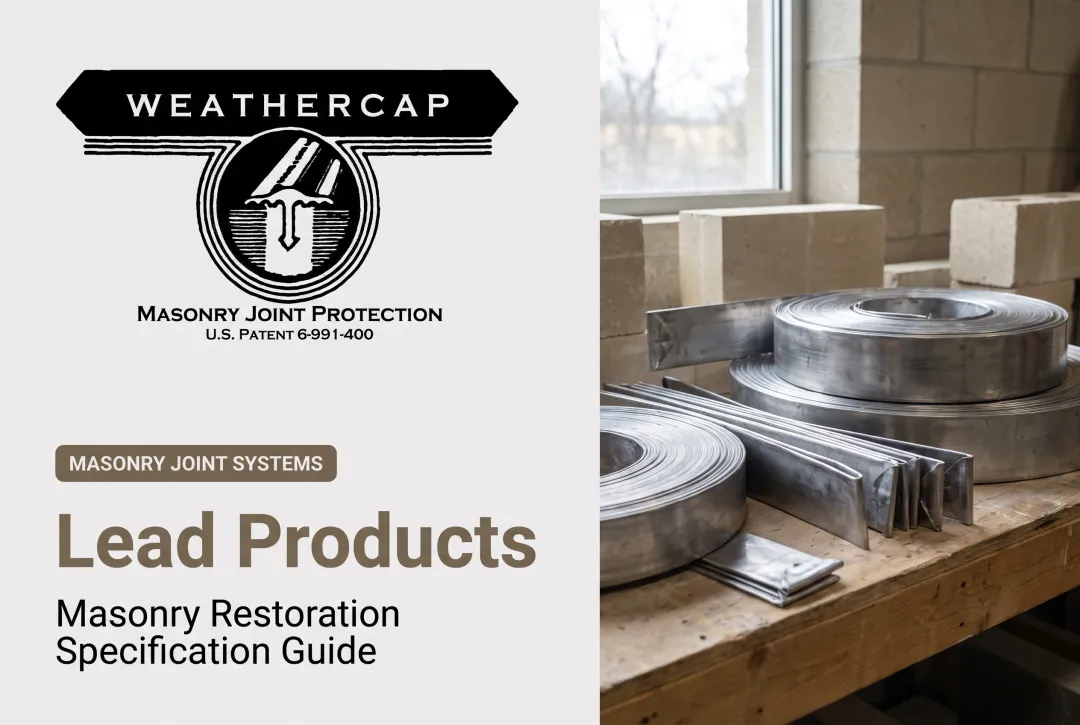
Masonry joints face a similar challenge to old pipe joints: they need a material that can absorb movement without cracking or losing its seal. This is where soft lead strip systems, used within masonry joints, come in. They're interposed directly into the sealant bed to buffer stress from building settlement and thermal expansion. That protection keeps caulk from the premature failure that claims most sealant-only joints.
Weathercap's patented lead strip joint protective system, manufactured in Slidell, Louisiana, is a working example of this legacy. Instead of connecting pipe, it's installed within coping and parapet joints on masonry buildings to prevent moisture infiltration where sealant alone tends to fail over time. The system has been used on projects including:
- The Washington Monument
- The U.S. Supreme Court Building
- The Smithsonian Institution
- The U.S. Treasury Building
- Grand Central Station

This is not a plumbing product, and it carries none of the drinking-water concerns tied to old supply pipes. It's an exterior building envelope material that oxidizes to a neutral grey finish, blending into the surrounding stone or masonry.
The link to old plumbing lead joints is material science, not the application. Lead once absorbed stress and locked seals in pipe joints. On masonry exteriors today, it still does that same job.
Frequently Asked Questions
What are lead and oakum joints?
A method of sealing cast iron pipe by packing oakum (tarred hemp or jute fiber) into the hub joint, then locking it with poured molten lead. It was the standard cast iron connection for most of the 20th century.
Does oakum contain asbestos?
No. Oakum is tarred hemp or jute fiber and does not inherently contain asbestos. In older homes, have a professional test any unfamiliar fibrous material near plumbing before disturbing it.
Is it safe to live in a house with lead pipes?
It depends on the pipe's purpose. Lead drain joints pose minimal risk if left undisturbed, but lead water supply pipes are a genuine health concern that warrants water testing or replacement.
Are lead and oakum joints still legal to install today?
In many jurisdictions, yes, for drain and vent lines only. The 1986 Safe Drinking Water Act banned lead for potable water piping, but drainage applications are governed by local plumbing codes, so check with your municipality.
What replaced lead and oakum joints in modern plumbing?
No-hub couplings with rubber gaskets and stainless steel bands, compression gasket bell-and-spigot systems, and PVC or ABS piping have largely replaced lead joints in new construction and repairs.
How can I tell if my home has lead pipe joints?
Look for a dull grey metal ring wrapped around the hub of cast iron pipe joints, typically in basements or crawl spaces. A licensed plumber can confirm what you're looking at and assess its condition.