

Stone moves.The lead moves with it.
Unknown building movement is among the primary causes of joint caulk and sealant failure. WEATHERCAP® takes that stress.
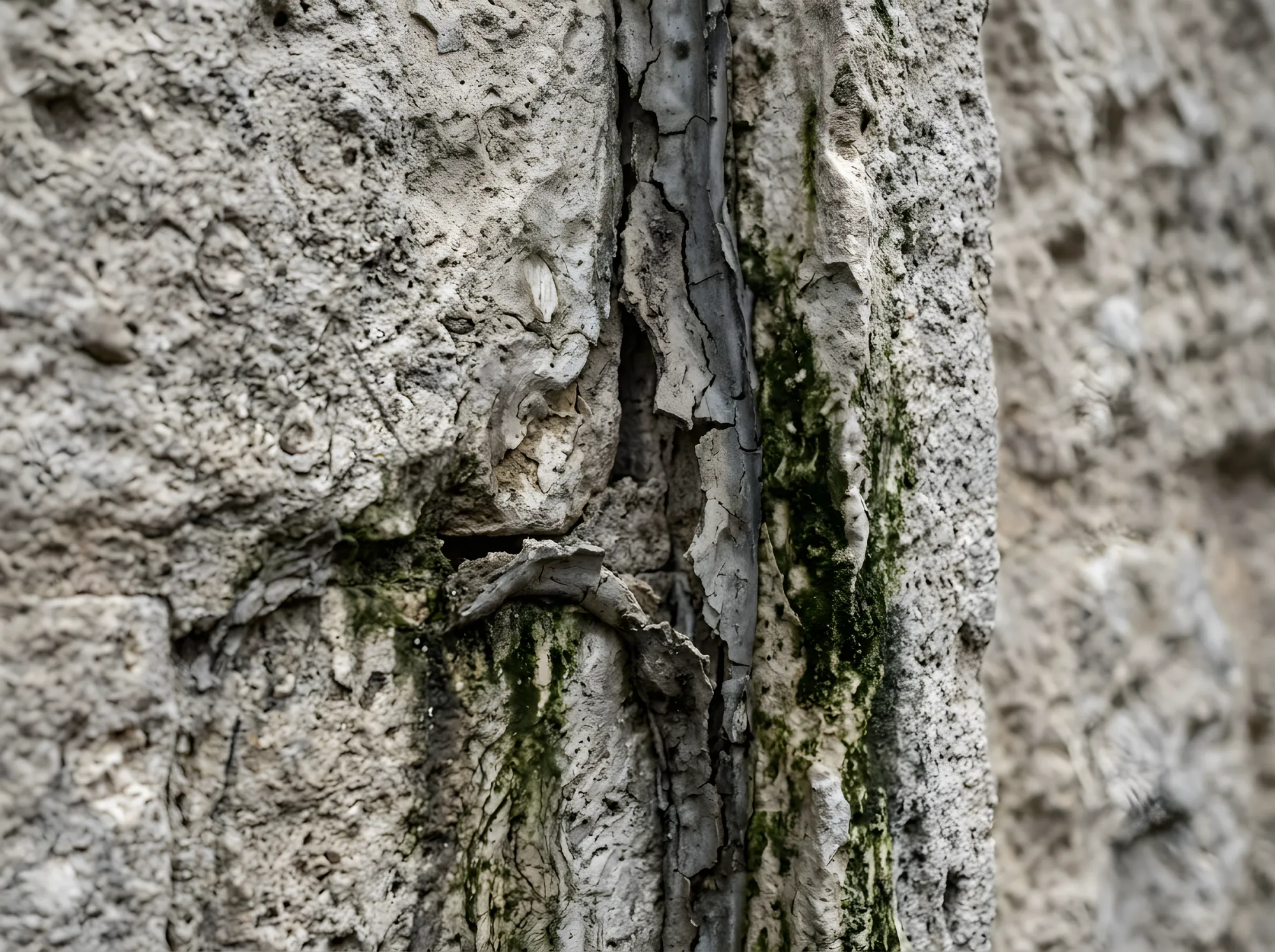
Why caulk alone fails.
If leakage and moisture penetration come from building movement or settlement, with resultant joint-checking, the sealant needs assistance.
Caulking or sealing a stone joint does not remove or compensate for movement. To specify a sealant, the owner or architect must determine the extremes of joint movement, and sealant manufacturers offer scribe kits for that.
Interposing WEATHERCAP® in the caulked joint takes the abuse of that stress. As an adjunct to the sealant, it reduces the size of the opening to be sealed, for improved, long-lasting, leak-free joints.
Inside the joint, step by step.
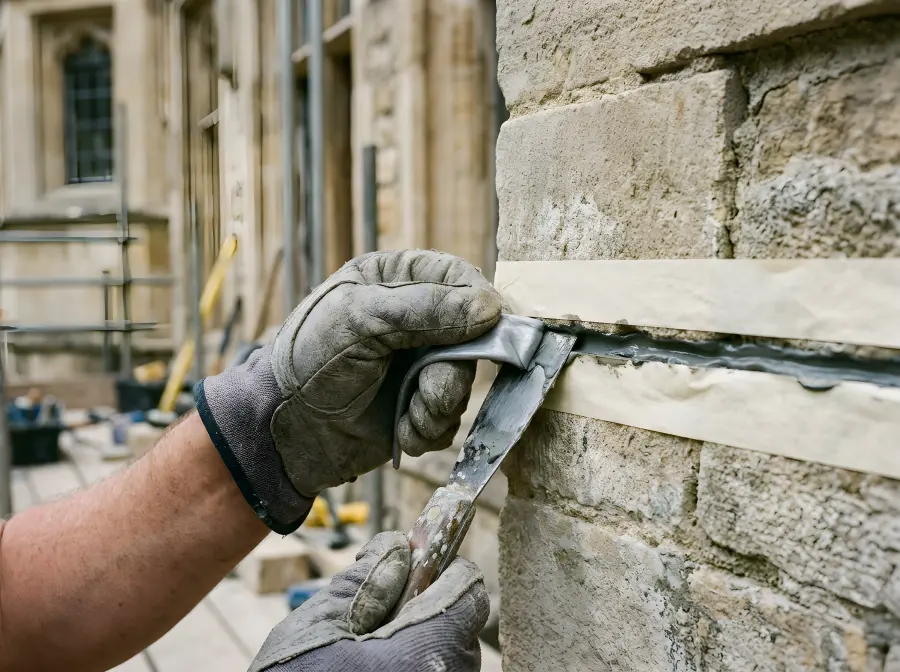
The joint is raked to depth and cleaned. Tape marks the cap width, a round backer rod goes in, and sealant is filled about 1/8 in. proud of the stone.
- Joints raked and clean
- 1 in. masking tape beside the marks
- Backer rod 1/4 in. below the shaft tip
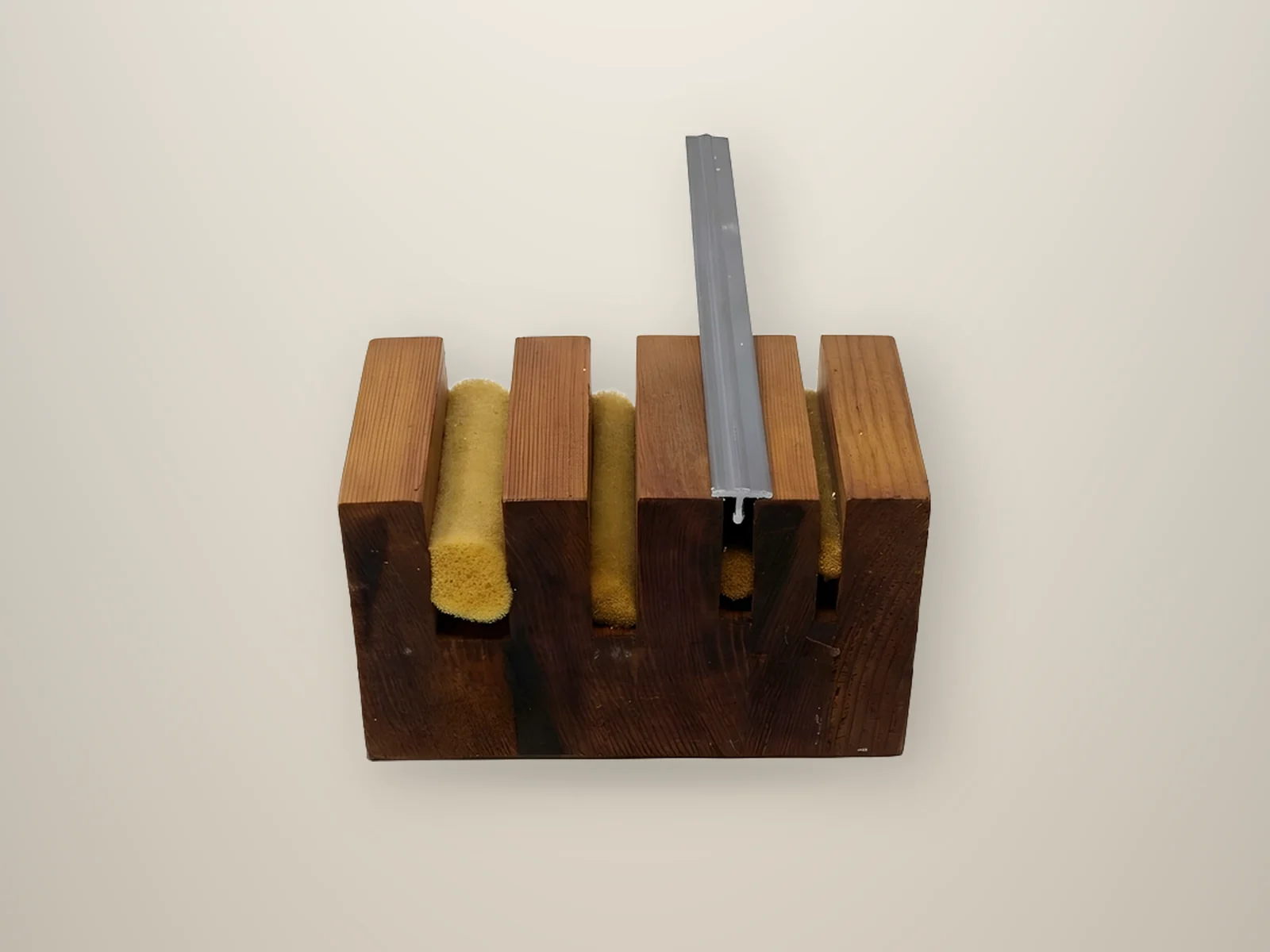
The soft lead tee cap is pressed into the sealant bed until the bonding grooves fill and no voids remain. The flange now covers the sealant, and the opening it must bridge is cut in half.
- Overlaps joint edges by at least 1/8 in.
- O.D. = joint + movement + 1/4 in.
- Excess struck off, tape peeled
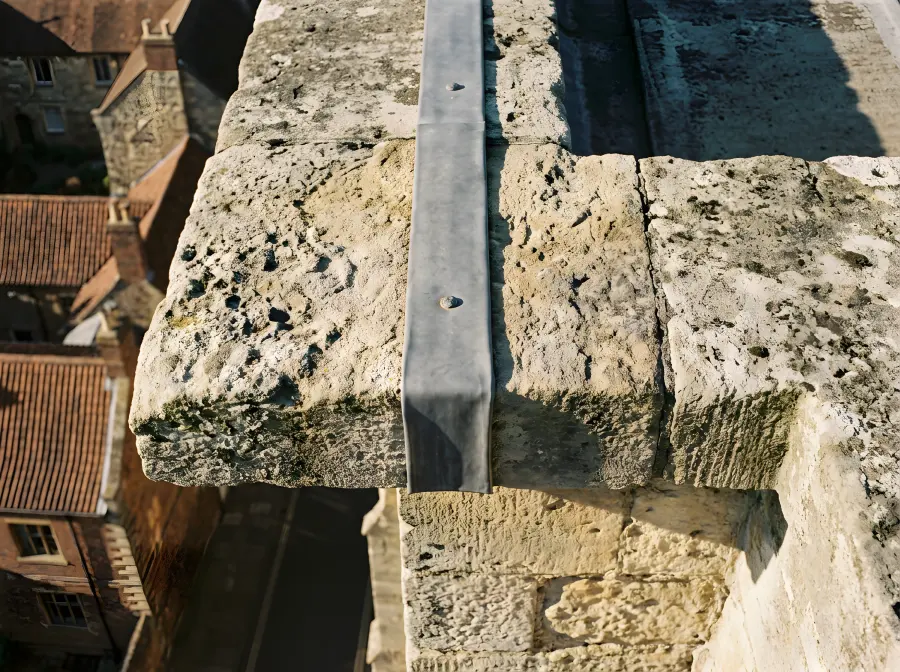
Buildings settle and stone moves. Lead's low creep strength lets the cap creep into the new configuration, and temperature change speeds it up.
- Low tensile strength, hardness and elastic modulus
- Creep continues within the joint's design limits
- Other metals hold their shape and let water in
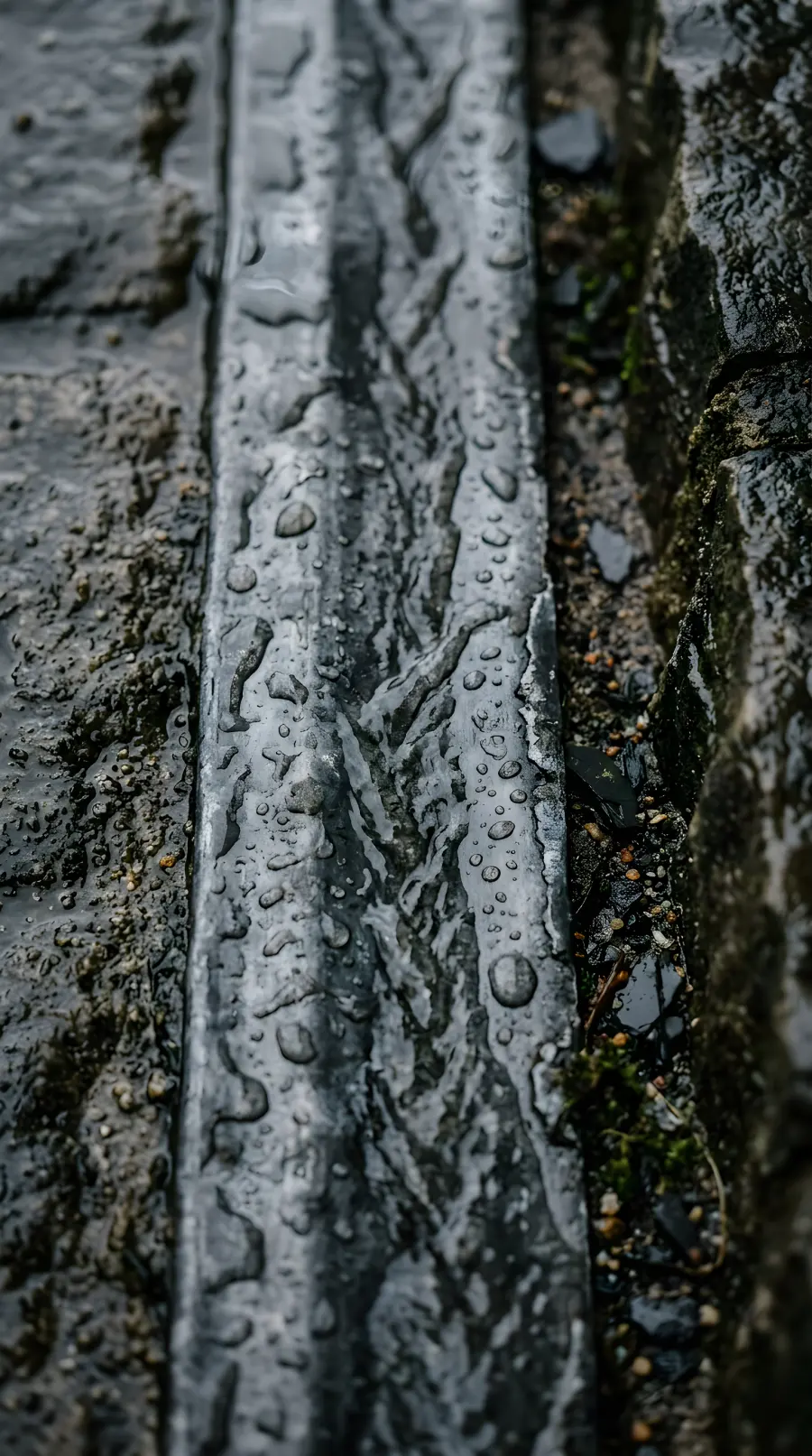
The surface oxidizes rapidly to a dead neutral grey that blends with masonry, and keeps shielding the sealant from sun, water and mold.
- Resists corrosion
- Resists mold on covered sealant
- Can be painted
The joint is raked to depth and cleaned. Tape marks the cap width, a round backer rod goes in, and sealant is filled about 1/8 in. proud of the stone.
- Joints raked and clean
- 1 in. masking tape beside the marks
- Backer rod 1/4 in. below the shaft tip
The soft lead tee cap is pressed into the sealant bed until the bonding grooves fill and no voids remain. The flange now covers the sealant, and the opening it must bridge is cut in half.
- Overlaps joint edges by at least 1/8 in.
- O.D. = joint + movement + 1/4 in.
- Excess struck off, tape peeled
Buildings settle and stone moves. Lead's low creep strength lets the cap creep into the new configuration, and temperature change speeds it up.
- Low tensile strength, hardness and elastic modulus
- Creep continues within the joint's design limits
- Other metals hold their shape and let water in
The surface oxidizes rapidly to a dead neutral grey that blends with masonry, and keeps shielding the sealant from sun, water and mold.
- Resists corrosion
- Resists mold on covered sealant
- Can be painted
Main attributes.
Joint size reduced by half
The size of the masonry joint is reduced by ½ when WEATHERCAP® is interposed in a joint between sealants.
Remains flexible
The soft lead keeps working with the joint instead of fighting it.
Will not tear or shear
It takes the abuse of the stress that would otherwise fall on the sealant.
Covers the sealant
Prolonging sealant life and preventing margin checking.
Not a conductor of heat and cold
The cap does not carry temperature into the joint.
Resists corrosion
Lead's corrosion resistance was tested in a chlorinated water study.
Can be painted
Or left to oxidize to a dead neutral grey that blends with masonry.
Resists mold
Including mold attack on covered sealant in high-humidity areas.
Buffers stress
Stress to copings atop parapets, and to right-angle junctions of two walls, is buffeted by WEATHERCAP®.
Creeps to the new shape
After a building movement, low creep strength lets the lead creep into the new configuration. Temperature change accelerates it.

Other metals would retain their original shape and permit moisture into the joint.From the WEATHERCAP® attributes
Tested in chlorinated water.
A Shilstone study of the chemical corrosion resistance of lead.
Pre-weighed strips of lead were immersed in water with 1.5 to 2.5 ppm dissolved chlorine at about pH 7.4, one set at 70 to 75°F and one at 95°F, alongside control samples. Lead concentration was measured five times over 12 days by atomic absorption spectrophotometry.
Talk through a failing joint.
Send the building, the joint widths and what you are seeing. We will help you choose the profile and size.
Request information
Fields marked * are required.
Request received.
Thank you. WEATHERCAP® will be in touch at the time you chose. For anything urgent, call (985) 649-4000.